Source Cat Scratching Post with Sofa Options for Cats
Find and compare 30 cat scratching post with sofa products from verified suppliers. Evaluate materials like sisal and particle board, sizes, and customization options to find the right fit for your pet needs.
Key considerations
Products List






Comprehensive Sourcing Guide
Cat Scratching Post with Sofa Sourcing Guide
Sourcing cat scratching posts that integrate seamlessly with existing furniture requires a strategic approach to balancing structural integrity, material safety, and aesthetic compatibility. The core keyword "cat scratching post with sofa" suggests a buyer intent focused on furniture-adjacent pet products, where the scratching post serves not only as a functional tool for feline health but also as a design element that complements home decor. Buyers must navigate a market where product attributes vary significantly, from simple sisal-wrapped poles to complex activity towers with multiple levels and textures. Understanding the distinction between standalone scratching posts and those designed to attach to or mimic sofa aesthetics is critical for successful procurement.
The procurement landscape for these items is characterized by a wide range of specifications, including varying heights, base dimensions, and material compositions. Observed market data indicates a price range of $1.90 to $49.75 USD, reflecting the disparity between basic single-post units and elaborate multi-feature cat trees. Minimum Order Quantities (MOQs) typically start at 10 pieces for certain models but can extend to 100 pieces for customized or larger units, requiring buyers to align their inventory strategy with supplier capabilities. Furthermore, delivery times vary from 3-7 days for stocked items to 30-45 days for OEM orders, necessitating careful planning for supply chain continuity.
Product Scope and Observed Listing Signals
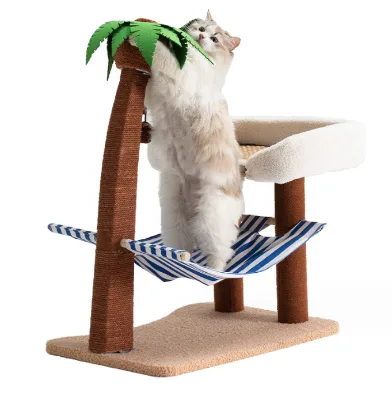
The product scope for cat scratching posts encompasses a diverse array of designs, ranging from simple vertical poles to complex activity towers featuring platforms, hammocks, and hanging toys. Observed listings highlight specific models such as the "Coconut Palm Tree Cat Scratching Post" and the "cat tree cat scratching post 70cm cat scratcher pole with ball," indicating a market trend toward nature-inspired aesthetics and interactive features. These products are primarily constructed from materials like sisal, particle board, MDF, cotton linen, and teddy velvet, offering buyers options that balance durability with comfort. The presence of features like "Cat Funny" functions and "Interactive Toys" suggests that modern buyers are looking for engagement-driven products rather than purely utilitarian scratching surfaces.
Visual and functional attributes play a significant role in the selection process, with colors such as blue and red being available, alongside customizable options to match specific interior design themes. The single gross weight of products ranges from 3.5 kg to 21.0 kg, indicating that larger, more stable units are preferred for heavy-use environments or multi-cat households. Buyers should note that while some products are described as "Eco-Friendly" or "Fashionable," these are subjective attributes that require verification through material certifications and physical samples. The availability of OEM services and customized logos allows brands to differentiate their offerings, but it also introduces complexity in the quality control process, as each custom run may have unique production requirements.
Technical Specifications to Verify
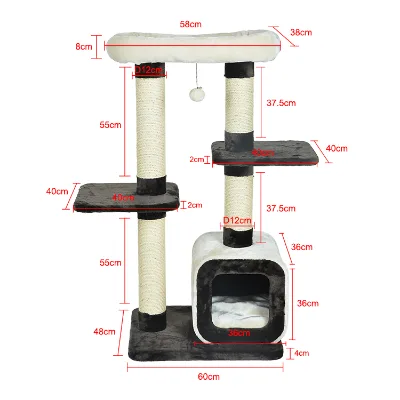
Verifying technical specifications is paramount to ensuring that the scratching posts meet the functional demands of cats and the spatial constraints of buyers' environments. Key dimensions to verify include the overall height, base footprint, and single package size, as these factors determine stability and shipping costs. For instance, models like the HY18544 have a size of 6048125 cm, while others like the LJQ-0263 are listed with a standard of 404050 cm, highlighting the need for precise measurement alignment. Buyers must confirm that the base width is sufficient to prevent tipping, especially for taller posts, and that the sisal wrapping is tightly wound to withstand vigorous scratching without unraveling.
Material composition is another critical technical aspect that requires rigorous verification. The core structure often utilizes particle board or MDF, which must be of high density to support the weight of climbing cats without sagging or breaking. The sisal rope, typically made from natural fibers, should be checked for thickness and durability, as thinner ropes may fray quickly under heavy use. Additionally, the inclusion of secondary materials like cotton linen or teddy velvet for platforms and hammocks should be assessed for stain resistance and ease of cleaning. Buyers should request detailed material breakdowns to ensure that adhesives and finishes used in construction are non-toxic and safe for pets, particularly in products that may come into direct contact with cats' paws and mouths.
Compliance and Safety Documentation
Compliance and safety documentation are essential for mitigating risks associated with pet product liability and ensuring consumer trust. Buyers must verify that all materials used in the construction of scratching posts, including sisal, wood, and fabrics, comply with relevant safety standards for pet accessories. This includes checking for the absence of harmful chemicals such as formaldehyde in particle boards and ensuring that dyes used in colored fabrics are non-toxic. While specific certification statuses are not universally listed, buyers should proactively request test reports from independent laboratories to confirm that products meet international safety guidelines for pet toys and furniture.
Furthermore, the structural integrity of the scratching posts must be validated through stress testing documentation. Buyers should inquire about load-bearing tests for platforms and hanging elements to ensure they can withstand the dynamic weight of active cats. For products marketed as "Eco-Friendly," buyers should seek verification of sustainable sourcing practices for sisal and wood materials. Clear labeling and instruction manuals are also part of the compliance package, providing users with proper assembly and maintenance guidelines to extend the product's lifespan and ensure safe usage. Without these documents, buyers risk facing returns, negative reviews, or legal issues related to product safety failures.
Cost Drivers and Commercial Terms
Cost drivers for cat scratching posts are influenced by material quality, design complexity, and customization levels. Basic models made from simple sisal and particle board tend to be at the lower end of the price spectrum, while elaborate towers with multiple textures, hanging toys, and premium fabrics command higher prices. The inclusion of OEM services, such as custom logo printing and unique color schemes, adds to the production cost due to setup fees and lower economies of scale. Buyers must also consider shipping costs, which are affected by the single package size and gross weight, as larger and heavier items incur higher freight charges.
Commercial terms, including MOQs and payment methods, vary significantly among suppliers. While some suppliers offer an MOQ of 10 pieces, others require 100 pieces, impacting the initial investment and inventory risk for buyers. Payment options typically include PayPal, Western Union, TT, and Trade Assurance, with Trade Assurance offering an additional layer of protection for international transactions. Delivery times range from 3-7 days for stocked items to 30-45 days for customized orders, requiring buyers to plan their procurement cycles accordingly. Understanding these commercial variables is crucial for accurate cost forecasting and maintaining healthy cash flow throughout the sourcing process.
Supplier Qualification and Quality Control
Supplier qualification is a critical step in ensuring a reliable supply chain for cat scratching posts. Buyers should assess suppliers based on their production capacity, experience in pet product manufacturing, and ability to meet specific quality standards. Verifying the supplier's location, such as Shandong, China, can provide insights into their logistical advantages and supply chain efficiency. Additionally, buyers should review the supplier's history of OEM projects to gauge their flexibility and responsiveness to custom requirements. A robust supplier will have clear communication channels and a proven track record of delivering products on time and within specification.
Quality control measures must be established before production begins to minimize defects and ensure consistency. Buyers should implement pre-production sample approvals, where physical samples are tested for structural stability, material durability, and aesthetic accuracy. During production, random inspections should be conducted to check for issues such as loose stitching, uneven sisal wrapping, or weak adhesive bonds. Post-production, a final random inspection based on AQL (Acceptable Quality Limit) standards should be performed to verify that the bulk order meets the agreed-upon quality criteria. Establishing a clear defect resolution policy with the supplier is also essential to handle any non-conforming products efficiently.
Long-Term Procurement Checks
Long-term procurement checks involve continuous monitoring of supplier performance and market trends to maintain a competitive edge. Buyers should regularly review supplier delivery times, quality metrics, and responsiveness to identify any potential issues early. Building a strong relationship with suppliers can lead to better pricing, priority production slots, and improved support for custom orders. Additionally, staying informed about emerging trends in pet product design, such as new materials or interactive features, allows buyers to innovate their product offerings and meet evolving consumer demands.
Sustainability and ethical sourcing are becoming increasingly important in the pet product industry. Buyers should periodically assess their suppliers' environmental practices, such as the use of sustainable sisal and eco-friendly adhesives, to align with growing consumer preferences for green products. Regular audits of supplier facilities can ensure compliance with labor standards and environmental regulations, reducing reputational risks. By maintaining a proactive approach to supplier management and market analysis, buyers can build a resilient and adaptable sourcing strategy that supports long-term business growth and customer satisfaction.
FAQs
What materials are used in cat scratching posts?
These posts typically use sisal, particle board, and cotton linen. Some models include teddy velvet for added comfort. The core structure relies on durable sisal rope for scratching, while the base often uses particle board or MDF for stability. This combination ensures longevity and safety for cats during play and climbing activities.
Can I customize the logo on these cat trees?
Yes, customized logos are acceptable for many models. Buyers can request specific branding to align with their business identity. This customization service allows for unique product differentiation in the market. Ensure you confirm logo printing details with the supplier before placing the order to meet your specific requirements.
What is the typical delivery time for these products?
Delivery times vary significantly by supplier and order volume. Some manufacturers offer fast delivery within 3-7 days, while others may require 30-45 days. This difference often depends on stock availability and production schedules. Always verify the lead time with your chosen supplier to plan your inventory and shipping logistics effectively.
What is the minimum order quantity for these items?
The minimum order quantity ranges from 1 piece to 1000 pieces depending on the supplier. Some vendors accept small trial orders of just 10 pieces, while others require larger bulk purchases. This flexibility allows buyers to test the market with low risk or secure better pricing through larger volume commitments.
Are these cat scratching posts electric or manual?
These products are not electric and operate manually. They rely on physical structures like sisal posts and platforms for cat interaction. This design ensures safety and reduces maintenance needs. Cats can climb, scratch, and play without the need for batteries or power sources, making them a reliable and simple pet accessory.
How are these cat trees packaged for shipping?
Products are typically packed in carton boxes for protection. Some suppliers offer custom packaging requirements to meet specific logistics needs. The packaging is designed to withstand shipping stresses while protecting the product. Standard dimensions vary, so check the single package size to calculate shipping costs and storage requirements accurately.